What happens when AI can show up to a meeting as you? If you build a digital twin at work, can you take it with you when you leave?
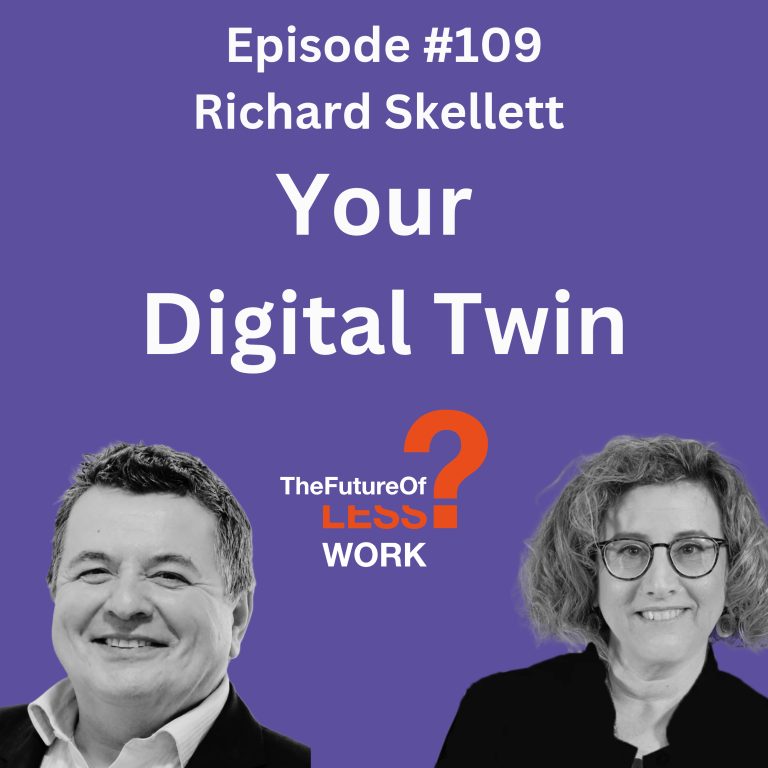
In this episode of The Future of Less Work, recorded at UNLEASH 2026 in Paris, host Nirit Cohen talks with Richard Skellett, Chief Analyst, Research & Design at Bloor Research, about what it takes to build a digital twin that can do more than search your notes or sound like you.
Richard shares how he built Digital Richard to join meetings, offer different perspectives, and even call him out when his actions don’t match his stated values. He explains why he started with his purpose, experiences, and judgment instead of starting with a pile of documents.
Nirit and Richard explore where that gets complicated for employers and employees. If a digital twin learns from your work and can keep contributing after you leave, what belongs to you, what belongs to the organization, and who shares in the value it creates?
Guest Information:
Richard Skellett is Chief Analyst, Research & Design at Bloor Research, where he leads work on how organizations redesign their operating models as people and AI work together. He built Digital Richard, his own human digital twin, as a practical experiment in extending what a person can do with AI. He co-authors a four-part series with Dave Ulrich on how AI and human capabilities can work together.
Links:
Richard Skellett on LinkedIn
Richard’s Bloor Research profile
From Original Intelligence to Convergent Intelligence: Why History Matters (Part 1 of 4)
Start With the Person, Not the Machine (Part 2 of 4)
Chapters:
00:00 Introduction: Meet the Human Behind Digital Richard
01:04 What Is a Digital Twin, and How Is It Different From a Second Brain?
03:35 When Your Digital Twin Takes the Meeting or Gives the Keynote
05:33 Can You Teach AI How You Think?
08:13 What Happens When Your Twin Calls You Out?
11:11 How One Twin Can Offer a CEO’s or CFO’s Perspective
13:43 How Do You and Your Digital Twin Keep Learning Together?
15:29 Who Owns Your Digital Twin When You Leave a Job?
17:51 What Happens to Organizational Memory in the Age of AI?
19:49 Who Gets the Value Created by a Digital Twin?
22:04 Could Digital Twins Change How Employers Pay for Work?
24:39 Is AI a Tool or Is It Changing the System of Work?
26:51 Why AI Can Amplify the Problems You Haven’t Solved
28:17 What Culture and Trust Have to Do With AI at Work